Google
Web heavenlyholidays.blogspot.com

Thursday, November 16, 2006

Christmas in Spain

Christmas is a very religious holiday in Spain. The Spain's patron saint is the Virgin Mary and the Christmas season officially begins December 8, the feast of the Immaculate Conception. Each year it is celebrated in front of the great Gothic cathedral in Seville with a ceremony called los Seises or the "dance of six." The elaborate ritual dance is performed by ten costumed boys; the dance is said to be quite moving and beautiful. It is made up of a series of precise traditional movements and gestures.

Christmas Eve is known as Nochebuena or "the Good Night." As the stars come out on Christmas Eve, tiny oil lamps are lit in every house. Family members gather together to rejoice and feast around the Nativity scenes, complete with carved figures, that are present in nearly every home. The traditional Christmas treat is turron, a kind of almond candy. After Midnight Mass and Christmas Dinner the streets fill with dancers and onlookers. There is a special Christmas dance called the Jota and the words and music of which have been handed down for hundreds of years. The dance is accompanied by the sound of guitars and castanets.

The Spanish especially honour the cow at Christmas. This is because it is thought that when Mary gave birth to Jesus, the cow in the stable breathed on the Baby Jesus to keep him warm. The Spanish Christmas is Navidad, people go to church, exchange presents, and many play on swing sets set up especially for the occasion. Swinging at solstice time evokes an ancient desire to encourage the sun, urging it to "swing" ever higher in the sky. December 28 is the feast of the Holy Innocents. Young boys of a town or village light bonfires while one of them acts as the mayor who orders the townspeople to perform civic chores such as sweeping the streets. If you refuse to comply fines are levied which are then used to pay for the celebration.

The children of Spain receive gifts on the feast of the Epiphany, January 6th, the date the Three Wise Men gave gifts to Jesus. The Magi are particularly revered in Spain. It is believed that they travel through the countryside re-enacting their journey to Bethlehem every year at this time.

On the 'Eve of The Kings', a parade takes place in each town centre. The locals dress as kings and walk through the towns, throwing sweets and gifts to the children watching. The Kings (Los Reyes), are the highlight of each child's Christmas and they write a gift list to 'The Kings' rather than Father Christmas, leaving food and drink out for them to enjoy while delivering the children's presents. Children leave their shoes on the windowsills and fill them with straw, carrots or barley for the horses of the Wise Men. By morning the camel food is gone and in place of the straw, carrots or barley are presents. Their favourite Wise Man is Balthazar who rides a donkey and is the one believed to leave the gifts.

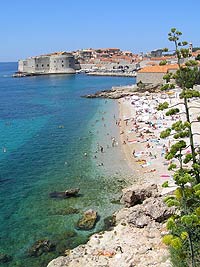
Visiting Croatia

Croatia has quickly become Europe's hottest destination, and for good reason. The rocky coastline continues for 1778 kilometres and includes pine-fringed coves, wide sandy beaches and cozy inlets. As if that weren't enough, there are a good 1185 islands that range from lush and wooded to stark and hilly. Yachties love the sailing opportunities, sunbathers have an incredible choice of beaches and scuba divers have a paradise of sea life to explore.


Beyond the pretty scenery, Croatia also boasts a fascinating history and cultural life.The walled city of Dubrovnik on its southern tip is a must-stop for Mediterranean cruises but the long coast is littered with remnants of Croatia's varied past.

The Romans swept through two thousand years ago, leaving an amphitheatre in Pula and Diocletian's Palace in Split. Long ruled by Venice, many ports along the coast bear the distinctive imprint of its former master. In southern Dalmatia, the towns of Hvar and Korcula resemble Little Venices without the canals. In Istria, the striking bell tower in Rovinj is modeled after that on St Mark's Square in Venice.

In contrast to the Italian-influenced coast, the Croatian interior was part of the Austro-Hungarian empire and looks it. Zagreb, Croatia's capital, has the kind of stately architecture that wouldn't be out of place in Vienna or Budapest. Plus,it has a small medieval quarter that vaguely resembles Prague.To the north of Zagreb, in the middle of green, rolling hills, lies Varazdin, Croatia's most underrated city. Lying too far from the coast to attract much tourism, Varazdin nevertheless boasts a stunningly well-preserved baroque center.

So, what to see first? Following is my personal list of highlights for a Croatian visit:

  • Dubrovnik

    Byron called it the "Pearl of the Adriatic" for the magnificent curtain of walls surrounding a city paved in marble and strewn with Renaissance sculpture.

  • Hvar Town

    In addition to the splendid harbor promenade and sculptured facades, it's becoming known for the best nightlife on the Adriatic.

  • Korcula Town

    It resembles Hvar in some ways, especially the narrow cluster of streets,but iit lies on a narrow peninsula and is quieter.

  • Rovinj

    Istria's prettiest little town, it retains the flavor of a traditional fishing port despite the heavy influx of tourists in recent years.

  • Plitvice Lakes National Park

    It has to be seen to be believed. The 16 turquose lakes seem to glow and there are waterfalls everywhere. It's a UNESCO world heritage site.

  • Brela Beach

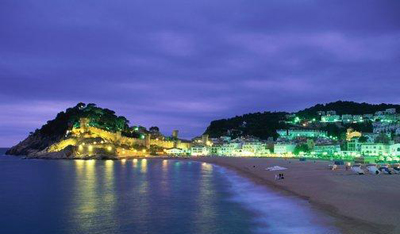
    The idyllic coves, bordered with pine trees, stretch out like a long necklace of beaches. Forbes magazine recently named it one of the top twenty beaches in the world.

No matter where you go in Croatia, you'll find people eager to welcome tourists after the grueling war of the early 1990s. English is widely spoken and costs are comparatively reasonable compared to the rest of the European coast. So what are you waiting for?

Wednesday, November 15, 2006

Unearthly Beautiful

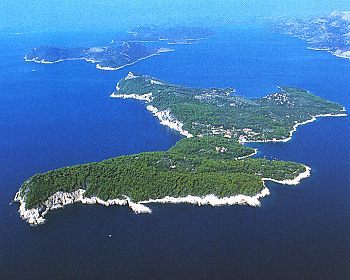
Accounts vary as to why the Roman naturalist Pliny the Elder chose to name the dainty archipelago that lies just off the coast of Dubrovnik after deer (elafos in Greek). One version has it that the assemblage reminded him of a deer’s antlers while another holds that these animals once inhabited the islands. Whatever the reason, the name has stuck, and appropriately too since they retain the beauty and mystery the Romans associated with these graceful animals.

Just three of the islands, Koločep, Lopud, and Šipan, are still inhabited, each of which can easily be reached by the inexpensive local Jadrolinija ferry that runs four times daily (twice on Sundays) throughout the year from Dubrovnik. All three islands have private accommodation, hotels, and small tourist offices that are open in summer only. Both Koločep and Lopud are, like the Old City of Dubrovnik, car-free.

A mere twenty five minutes by boat from the mainland, Koločep, the smallest of the inhabited islands at a mere 2.35 squares kilometres, was once the favored summer home of the Dubrovnik aristocracy (as if the living in Dubrovnik itself wasn’t pleasant enough!) Consequently it’s littered with all sorts of ruins, some dating back to Roman times. Much of the island is covered in thick forest with the result that the settlements of Gornje Čelo and Donje Čelo, are crammed into its two largest coves. The clear seas nearby allowed their inhabitants to develop a reputation in past centuries as the Mediterranean’s most renowned coral divers.

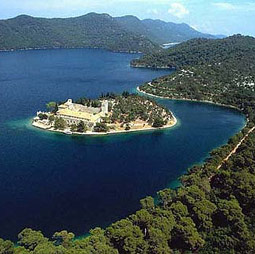
The most “developed” of the islands, although the word hardly seems appropriate, Lopud was likewise once a playground of the Dubrovnik nobility. It’s the second largest of the islands at 4.63 square kilometres and forty minutes by boat from Dubrovnik. It features the finest ruins of the three islands – in particular the remains of the Rector’s Palace (which today are preserved as a verdant park) on the outskirts of its sole town and hill-top Franciscan Monastery, whose remains offer wonderful views over the island and its many ruined churches. Lopud’s greatest pleasure is an earthly one, however, which is to be found in Sunj Bay, on the far side of the island, whose calm waters are popular with boaters and whose pleasantly sloping white-sand beach is much beloved by the small number of discerning bathers aware of its presence.

The largest (at 16.5 square kilometres) and wildest of the islands, Šipan contains a wide plain given over to wine and olive groves surrounded by hills, many of them covered in the remnants of ancient churches. There are few better ways to get a sense of how Croatia and indeed the entire Mediterranean once was than by strolling across the valley at the center of the island along road between the settlements of Suđurađ and Šipanska Luka. The two towns are 65 minutes and 100 minutes away from Dubrovnik respectively by ferry, although some ferries only stop at Suđurađ.

Tuesday, November 14, 2006

The Hawaiian Christmas

Christmas in Hawaii this year is as festive as ever, and some very well priced, holiday airfares can be found (at last check as low as $300 from US West Coast). Whether your vacation is budget or extravagant, you can create some beautiful holiday memories on Oahu.

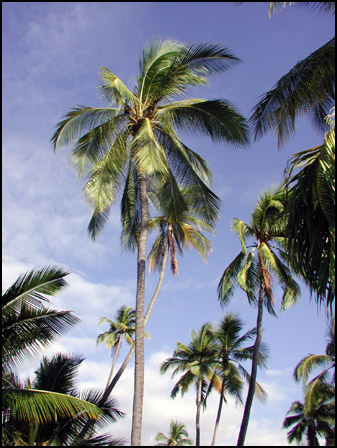
Hawaiian Christmas memories are among my favorite remembrances of living in Hawaii. Listening to the children belt out their favorites like "Here Comes Santa in a Red Canoe," and the Hawaiian version of "The 12 Days of Christmas," and hearing "Silent Night" sung in English and Hawaiian by an angelic choir on a balmy evening under the stars with palm trees swaying are experiences not to be missed.Just walking downtown is a delight during the holidays.

And I'll never forget arriving at the Honolulu Airport for the first time during the holiday season and being in awe of the towering tree all decked out with huge, lauhala woven pineapples and golden lights.

Holidays in Hawaii, especially Christmas are widely celebrated. This is a very churched community, but even many of the Buddhist families participate in Christmas traditions, especially the Japanese-Americans who come who have a reputation for loving to give gifts.

If you're visiting the islands for the holidays, you will find a myriad of Christmas events on Oahu, actually on all the islands, but more so on Oahu.

In Hawaii, Santa gives his reindeer a Christmas break and arrives in a canoe, barefoot, tanned and with his red furry pants rolled up. On Oahu, his first stop is, as it is for most of Hawaii's visitors, Waikiki Beach in Honolulu. Keiki (children) visit their Hawaiian Santa at various cities on Oahu throughout the season.

While at Christmas time, many of the islanders enjoy watching the visitors in awe of this warm, friendly climate in the dead of winter, they also enjoy imagining what a white Christmas would be like. You'll hear many of the traditional mainland songs, like "Winter Wonderland" and "Jingle Bells."

Some Hawaiians though do have a white Christmas, that is if they're on the Big Island (island of Hawaii) and drive up above the tree line to the 10,000 foot high snowcapped peaks of Mauna Kea, transforming their boogie boards into sleds and building snowmen! With the current, cheap airfares from between Oahu and Neighbor Islands,a side trip from Oahu to the Big Island is more affordable than its been in a long time.

It's fun swapping tropical and white Christmas stories with locals. For us visitors it's especially fun to write home about how we spent our Christmas day on a beach! Some newcomers to Hawaii will even bring miniature trees down to the beach, although Hawaii has plenty Christmas trees. On Oahu,as on the other islands, trees from the mainland are sold. And, Hawaii has its own Christmas tree: the island Norfolk Pine. The tree doesn't have the spicy pine scent, but its largely spaced branches are wonderfully easy to decorate.

Hawaiian Christmas tree decorations are found everywhere. Craft fairs are great for finding local style ones: coconut frond woven ornaments, kukui nut and tapa cloth angels, Santas on surfboards in canoes and riding dolphins; along with beautiful wreaths made of island flowers and greenery.

Many of these craft fairs are events in themselves, complete with Hawaiian Christmas entertainment and food. You'll find many of these listed along with other holiday Oahu events in newspapers and free magazines at the airport.

Some of my favorite Oahu events at Christmas are the light displays in Honolulu and the music – choirs, orchestras and local style bands are found everywhere with free concerts at malls and on the beach. Adding to the holiday fun, many of Hawaii's most popular musicians like the Brothers Cazimero and Don Ho perform regularly in Waikiki.

The Honolulu City Lights (the city was given permission by Keola and Kapono Beamer to use the name of their all time hit song) is a spectacular display throughout Honolulu, including Waikiki, making Oahu a good pick for a Hawaiian holiday vacation.

The month-long, traditional festivities begin with the Kawaiahao Church Service in Honolulu (This was the first Christian church built in Hawaii and is extraordinary), the lighting of the City's 63-foot Norfolk Pine at Honolulu Hale (City Hall) and an electric parade and concert on December 3; however festivities continue throughout the holiday season.

For example, the Honolulu City Lights Trolley Tours run from December 8 to 30. The $2.50 fare (under age 4 free) benefits the Hawaii Food bank. For details, visit Honolulu Hale. If you go, be sure to check out the other Oahu event calendars mentioned above as well as this one's. And check out the holiday airfares at places like Hawaiian Airlines and Hotwire.com.

Mele Kalikimaka!